
The Hidden Cost of Restaurant Procurement Nobody Talks About
Restaurant procurement inefficiencies cost far more than food prices alone—discover the hidden drain on profitability through wasted time and operational chaos.
The Time Tax: When Chef Hours Become Procurement Hours

Every Tuesday morning, Chef Maria spends three hours on the phone with seven different farms, checking availability for the week ahead. She's not cooking, mentoring her team, or developing the seasonal menu that keeps her restaurant competitive. She's playing phone tag, cross-referencing prices on scattered spreadsheets, and coordinating delivery windows that rarely align. This scene repeats in commercial kitchens nationwide, representing one of restaurant operations' most overlooked profit drains.
The mathematics are sobering. If a head chef earning $65,000 annually dedicates 15 hours weekly to procurement tasks, that's nearly $19,000 in labor costs—not creating culinary experiences, but managing logistics. For restaurants operating on 3-5% profit margins, this represents a substantial hidden expense. Yet most operators track food cost percentages religiously while completely overlooking procurement efficiency as a line item. The opportunity cost extends beyond salary: those hours could generate revenue through menu innovation, staff development, or improved kitchen management systems that enhance overall profitability.
The Domino Effect: How Fragmented Sourcing Cascades Through Operations
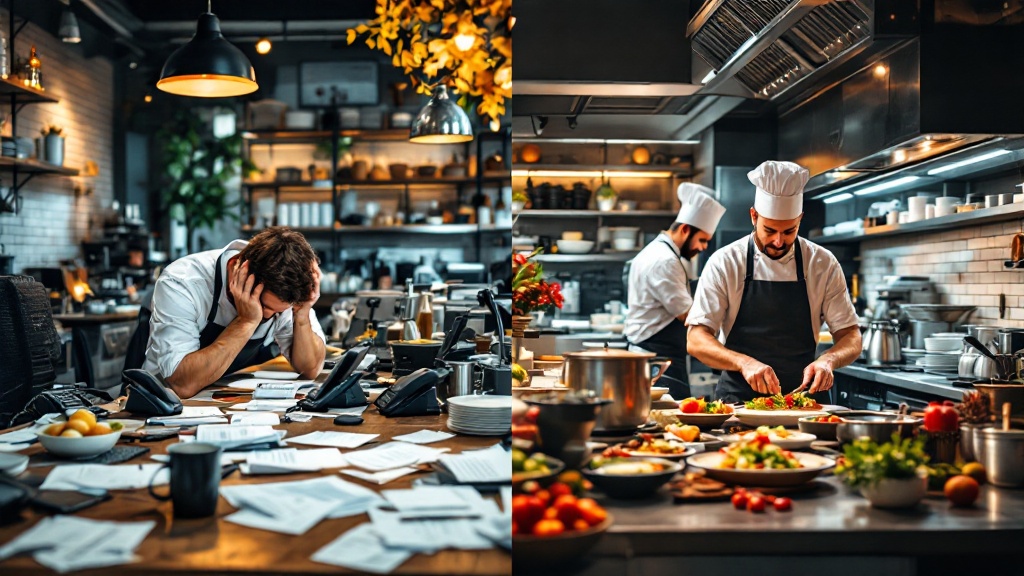
Procurement inefficiency doesn't stop at wasted administrative time—it triggers a cascade of operational problems throughout the kitchen. When a farm can't deliver the expected heirloom tomatoes, the chef scrambles to redesign menu specials. When delivery windows from four different suppliers span six hours, receiving staff stand idle, then rush through quality checks when everything arrives simultaneously. Inventory prediction errors compound as inconsistent supplier relationships make forecasting nearly impossible, leading to both waste and emergency purchases at premium prices.
This fragmentation directly undermines restaurant profitability through multiple channels. Menu consistency suffers when ingredient availability fluctuates unpredictably, disappointing regulars who return for signature dishes. Kitchen staff morale declines as last-minute substitutions create stress and undermine training. Food cost management becomes reactive rather than strategic, with chefs making purchasing decisions under pressure rather than optimizing for both quality and margin. The compounding effect means a 2% increase in food costs from emergency sourcing, combined with 5 hours of wasted labor weekly, can eliminate 30-40% of a restaurant's net profit.
The most insidious impact affects what restaurants can't easily measure: the innovative menu concepts never developed, the local farm partnerships never cultivated, and the competitive advantages never realized because leadership attention remains trapped in procurement logistics rather than strategic growth.
Breaking the Cycle: The Strategic Value of Procurement Transformation

Forward-thinking restaurants are recognizing procurement not as an unavoidable burden, but as a strategic lever for competitive advantage. By consolidating supplier relationships and implementing unified ordering systems, operators are reclaiming 10-15 hours weekly of leadership time—redirecting it toward revenue-generating activities. This transformation goes beyond efficiency; it fundamentally changes what's possible in restaurant operations.
The business case extends across multiple dimensions. Reduced procurement time directly improves labor productivity. Consolidated ordering with transparent pricing enables true food cost management rather than reactive purchasing. Predictable delivery windows allow kitchen management to optimize prep schedules and labor allocation. Most significantly, stronger farm relationships through consistent, streamlined ordering unlock access to premium ingredients and preferential pricing that fragmented buyers never achieve. Restaurants implementing procurement efficiency initiatives typically see 15-25% reductions in sourcing time, 8-12% improvements in food cost variance, and measurable increases in menu consistency scores.
The competitive implications are profound: while competitors remain trapped in procurement inefficiency, optimized operations can invest reclaimed resources in culinary innovation, staff development, and customer experience—the factors that actually drive restaurant profitability and long-term success in an increasingly competitive market.